Why ERP systems fail after 5 years? Revitalizing and optimizing ERP without expensive implementation
Most companies go through the same cycle. They implement a modern information system (ERP) with great glory and millions of dollars. The first few months are a drama, but in the end everything works. Around the fifth year, however, the cogs in the wheel start to turn.
The amount of add-ons and unsystematic changes is over your head. The original team is no longer with the company, vendor support is restrictive rather than proactive, and new people are finding their own paths. By year eight, the system is seen as a “necessary evil” that is holding the company back.
At LightMe, we call this phenomenon “ERP degradation”.
The good news is that the solution is usually not to buy new software for millions more, but to in-depth revitalization and optimization of the existing ERP system.
The anatomy of decline: How dangerous “shadow IT” is emerging
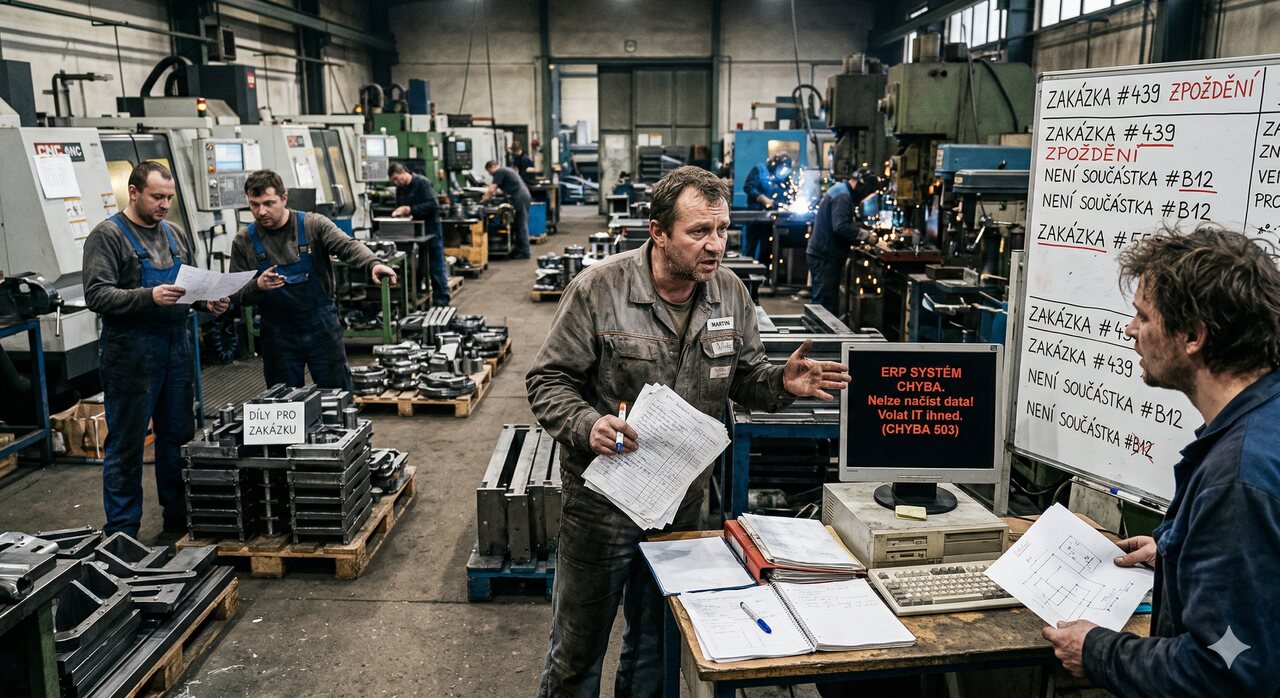
When ERP stops keeping up with the pace of business, people start helping themselves. It’s a natural defense mechanism, but one that internally erodes the company. Typically, it looks like this:
- Excel domination: The trader keeps a spreadsheet on the side because the ERP does not show him the margin in real time. Manufacturing has its own plan in Excel because the one in the system is “too rigid”.
- Information silos and data fragmentation: data exists but is trapped in departments. The CFO sees different numbers than the warehouse manager. The result is a complete loss of trust in the data.
- Process erosion: Instead of managing processes, people just use the system as a digital archive – they write things into it after they have happened.
The 3 pillars of successful recovery (Recovery Strategy by LightMe)
If you are at this stage, you are faced with a decision: to reimplement or to optimize? We at LightMe recommend optimization, which saves time and costs. We rely on three pillars:
Audit “User Truths”
Forget the technical documentation. You’ll only find out the real situation at the table with the key users. We need to name the places where the system is “hurting” users. Often you’ll find that all it takes is a minor workflow reconfiguration or a new data view to get people back into the system.
Elimination of data entropy and data cleaning
Data in ERP tends to get “dirty” over time. Duplicates, outdated price lists, forgotten orders. ERP revitalization needs to start with a big cleanup. A system that people don’t trust because of bad data is a dead system.
Bridging the gap between IT and Business
The biggest mistake is to leave ERP administration to the IT department alone. ERP is a business tool. The recovery strategy must define the “Business Owners” – the people in operations who dictate to the IT department what they need to do to work effectively.
Is it time for a reboot or is professional service enough?
Before you take the radical step of replacing all your software, ask yourself these questions and save your ERP:
- Are we using at least 60% of the features we paid for from the supplier?
- Are our problems caused by software limitations or rigid processes and people resistance?
- Do we know exactly how much faster the order flow would be if the data flowed smoothly?
Conclusion: the ERP as a living organism
An ERP system is not a refrigerator that you plug in and don’t know about for 10 years. It’s a living organism that needs to grow with your business. If the system is suffocating you, it needs to “oxygenate” – straighten out processes and clean up data.
Rebuilding an existing system is usually 60-70% cheaper than a new implementation and delivers results within weeks.
Leave us your contact details and we will provide you with a free scan of your ERP system in return.